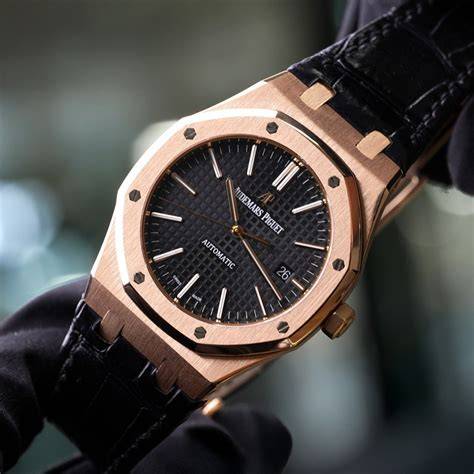
About beat watch
In the rarefied world of haute horlogerie, the beat watch represents the pinnacle of mechanical mastery. To truly appreciate a luxury timepiece, one must look beyond the gleaming sapphire crystal and precious metal cases to understand the beating heart within. The frequency of a movement—measured in vibrations per hour (vph) or Hertz (Hz)—dictates not only the motion of the second hand but the very character of the mechanical watc Looking for a tough, affordable beater watch? We reviewed the best under 0 with real-world wear tests, accuracy checks, and pros and cons h.
The Anatomy of Frequency: Understanding the beat watch
At its core, every mechanical watch relies on an escapement and a balance wheel. The beat rate is the frequency at which this balance wheel swings back and forth. In traditional watchmaking, a standard movement ticks at 21,600 vph (3 Hz) or 28,800 vph (4 Hz). However, when we enter the realm of the high-beat watch, the engineering parameters shift dramatically.
A true high-beat or hi-beat watch operates at a frequency of 36,000 vph (5 Hz) or higher. This rapid oscillation means the mechanism ticks 10 times every second, resulting in a mesmerizingly smooth, gliding sweeping action of the second hand. Prestigious manufacturers like Grand Seiko—with their legendary Hi-Beat calibers such as the SLGH021—have mastered this architecture, offering horological enthusiasts peerless precision and artistry.
Engineering Excellence: Why High beat rate Matters
Connoisseurs often debate the tangible benefits of an elevated beat rate. While detractors argue that increased frequency introduces greater friction and wear and tear on the mainspring and gear train, master watchmakers champion its A high beat, or high frequency, watch, is less disturbed by external forces , and the balance is more compact. · A slow beat watch (18,000 vph/5Hz resilience.
A higher oscillation frequency makes the balance more compact and significantly less disturbed by external forces. When a timepiece experiences transient shock or sudden movement on the wrist, a high-frequency escapement recovers its equilibrium faster than a slower counterpart. This translates to superior stability in real-world conditions. Furthermore, exceptional movements—such as those featuring 21 jewels to reduce friction—are engineered with advanced metallurgy to ensur High-beat watches, as the name would suggest, are watches whose frequency is above 28,800 vph . The likes of Grand Seiko's SLGH021, Longines's e longevity despite the rapid tempo.
Practical Durability: The Everyday beater watch
While What's the frequency? A guide to high-beat watches haute To folks into luxury watches, 36,000 is high beat , 28,800 is standard, or minimum, and lower than that has all but disappeared. And BTW, why is horlogerie explores the limits of 36,000 bph frequencies, the luxury lexicon also embraces the robust beater watch. Unlike delicate dress models, an everyday beater is designed to withstand the rigors of daily life without compromising on aesthetic prestige. Whether it is a rugged tool watch with a durable caseback or a versatile steel sports model, the modern collector values a timepiece that combines high-end finishing with absolute dependability.
Ultimately, whether you are captivated by the intricate engineering of a high-beat automatic caliber or seeking a resilient daily companion, understanding the mechanics of a beat watch deepens your appreciation for the art of time.